
Microneedling Before and After: Understanding the Process and Results
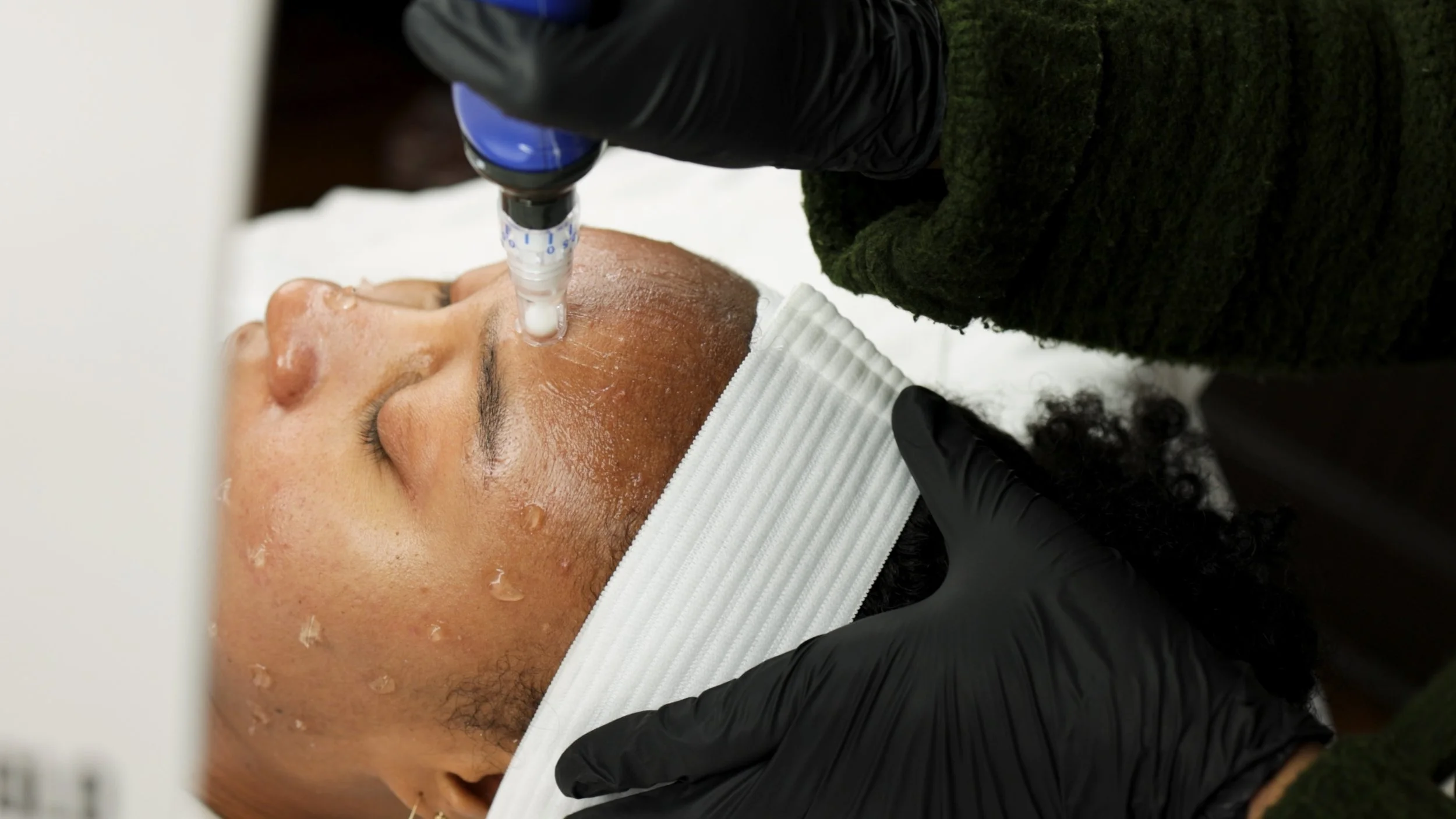
Microneedling treatment series at Leyla Sufi Skin
Microneedling is often discussed in terms of dramatic before and after images, but the most meaningful results are not found in a single moment. They unfold gradually, shaped by how the skin heals, how consistently it is supported, and how well expectations align with reality.
When approached thoughtfully, microneedling can be one of the most effective treatments for improving skin texture, scarring, and overall tone. Understanding what the process actually does and how results develop helps remove urgency from the experience and replaces it with trust.
Understanding Microneedling as a Skin Renewal Treatment
Microneedling is a form of collagen induction therapy that works by creating controlled micro-channels in the skin. These micro-injuries are intentional and precise. Rather than causing damage, they prompt the skin to activate its natural repair systems.
As the skin begins to heal, growth factors are released and fibroblasts increase production of collagen and elastin. Over time, this internal rebuilding strengthens the skin’s structure, softens irregularities, and improves overall resilience.
Professional treatments typically work at depths that allow meaningful change without overwhelming the skin. Shallower depths support overall rejuvenation and product absorption, while deeper treatments are reserved for concerns such as acne scarring and textural irregularities.
The collagen formed through this process is primarily type III collagen, which provides structural support and can remain active in the skin for years when properly maintained.
Skin Concerns That Respond Well to Microneedling
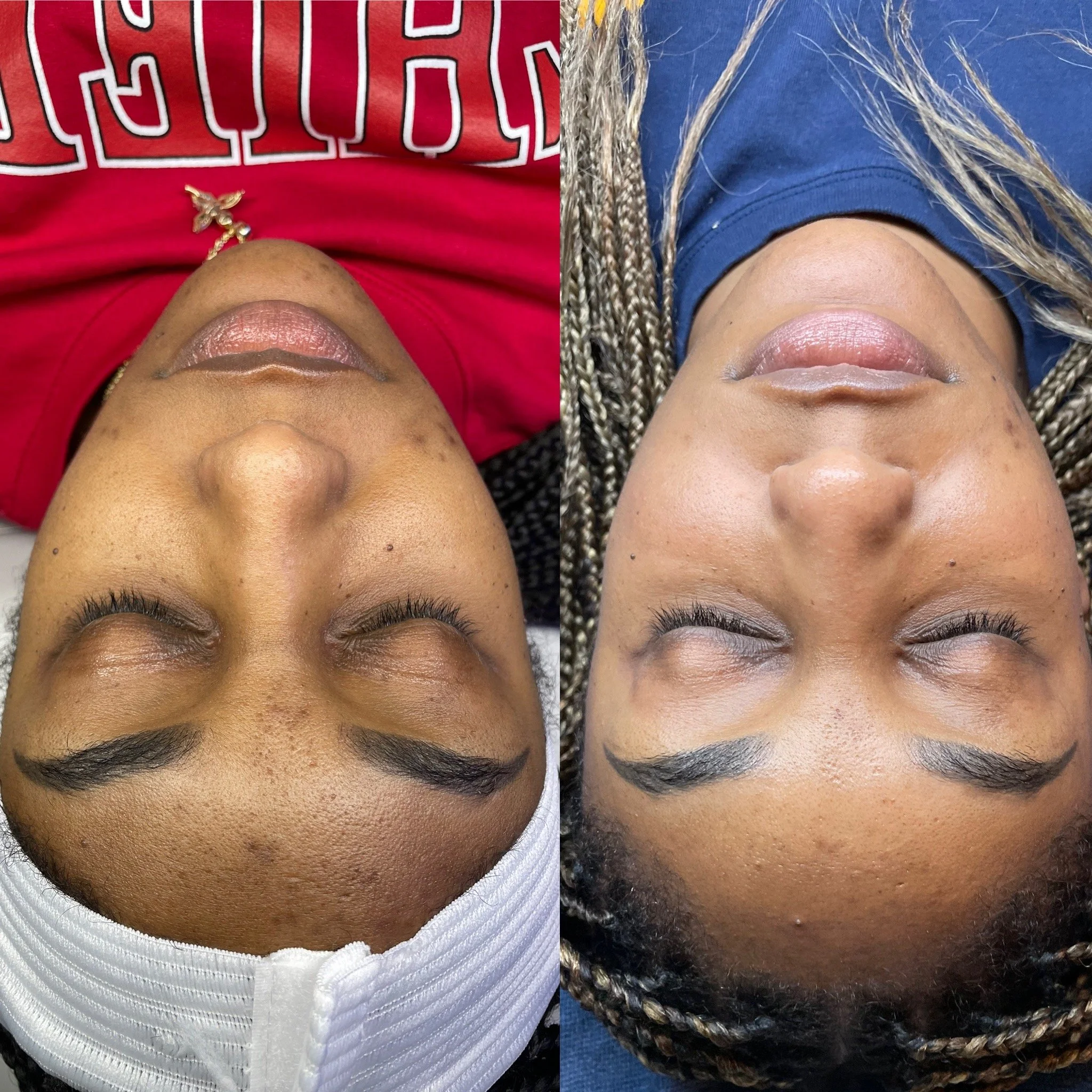
Microneedling is especially effective for concerns rooted in texture and structural integrity.
Acne scarring, particularly rolling or atrophic scars, responds well as new collagen fills and softens uneven areas. Fine lines gradually appear less defined as the skin becomes denser and more supported from within.
Uneven tone and sun damage can also improve as cellular turnover increases and healthier skin cells rise to the surface. Over time, the complexion appears more balanced and refined, not because pigment is stripped away, but because the skin is functioning more efficiently.
What Microneedling Before and After Results Really Look Like
Most visible results associated with microneedling occur after a series of treatments rather than a single session. Understanding the timeline helps set realistic expectations and prevents unnecessary disappointment.
In the days following treatment, the skin often appears flushed and feels sensitive, similar to a mild sunburn. This response is temporary and part of the skin’s early healing phase.
Over the following weeks, improvements begin to emerge quietly. Around four to six weeks after treatment, collagen production becomes more noticeable. Texture feels smoother. Scarring appears softened. Tone begins to look more even.
The most significant changes typically appear several months after completing a treatment series. This is when the deeper layers of the skin have had time to fully remodel and strengthen.
Results by Skin Concern
Acne Scarring
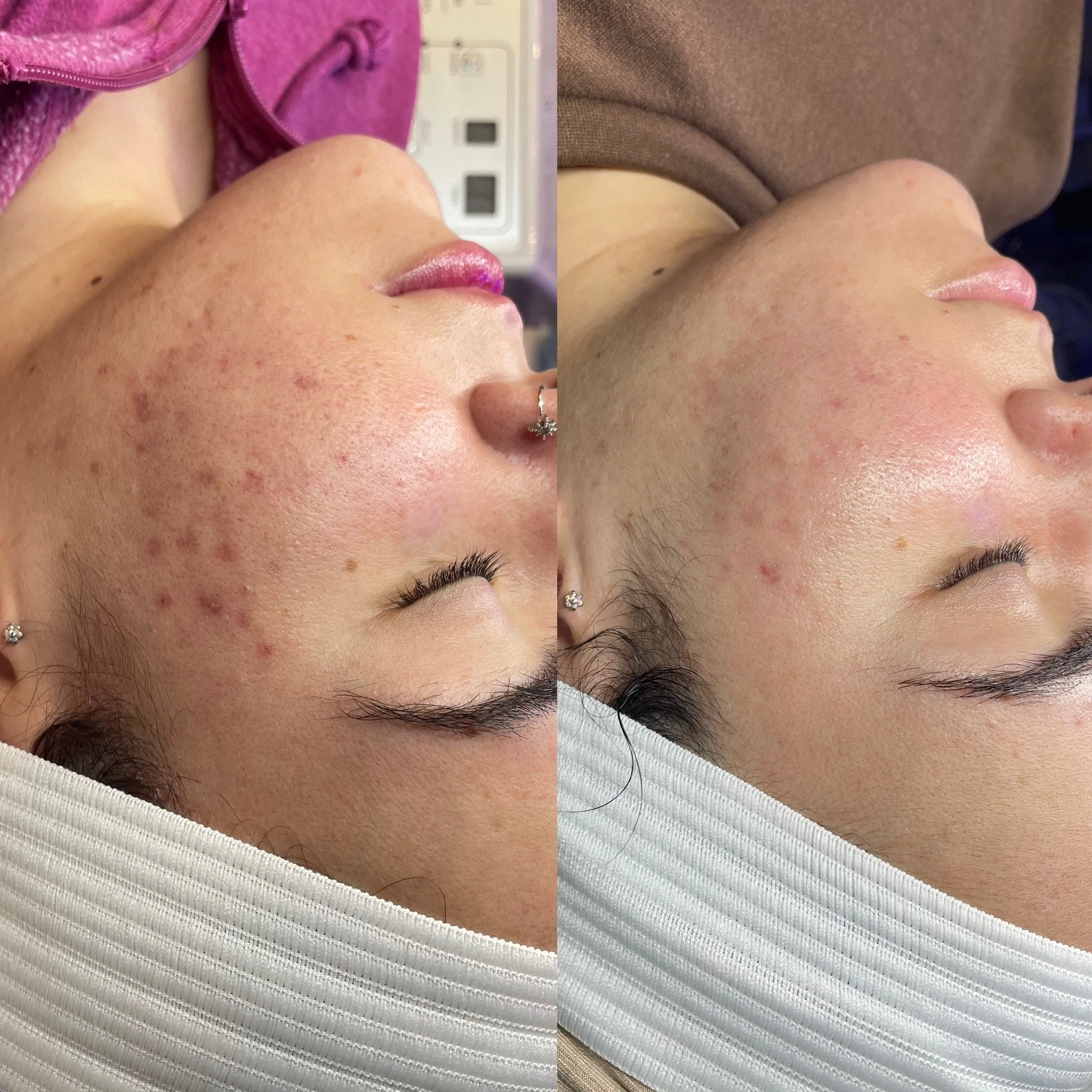
Microneedling before and after at Leyla Sufi Skin
Acne scarring tends to show some of the most visible improvement with microneedling. As collagen rebuilds beneath the surface, depressions become less pronounced and the skin takes on a more even appearance.
Most individuals require three to six treatments spaced several weeks apart. Progress is gradual and cumulative, which is why patience plays such an important role in outcomes.
Fine Lines and Early Signs of Aging
Fine lines around the eyes, mouth, and forehead respond well as collagen density improves. Rather than creating stiffness, microneedling encourages the skin to regain firmness and elasticity naturally.
Neck and chest areas can also benefit when treatments are performed thoughtfully and supported with appropriate home care.
Hyperpigmentation and Uneven Tone
Microneedling can support improved tone by encouraging healthy cell turnover and reducing the appearance of lingering discoloration over time. Results are most consistent when treatments are paired with diligent sun protection and a barrier-supportive routine.
What Influences Individual Results
No two skins respond identically, and outcomes depend on several factors.
Age influences how quickly collagen is produced, though skin of all ages can benefit when treatments are properly planned. Skin tone also matters. Microneedling is well suited for deeper skin tones, where other resurfacing treatments may carry a higher risk of post-inflammatory pigmentation.
Preparation and aftercare play a critical role. Skin that is supported with antioxidants, barrier-repair ingredients, and consistent sun protection responds more predictably and heals more smoothly.
Treatment Series and Investment
Microneedling is most effective when performed as a series rather than a one-time treatment. Most clients see meaningful improvement after three to six sessions spaced four to six weeks apart, allowing the skin adequate time to heal between treatments.
Maintenance treatments once or twice per year help preserve results and support long-term skin health.
Professional microneedling treatments typically range from $300 to $450 per session, depending on treatment depth, customization, and included modalities.
Professional Treatment Versus At-Home Devices

Microneedle by SkinPen
At-home microneedling tools are designed for superficial stimulation and product absorption. They do not penetrate deeply enough to create the level of collagen remodeling achieved through professional treatments.
Professional devices allow for precise depth control, sterile conditions, and clinical judgment that ensures the skin is treated safely and effectively. This distinction is important not only for results, but also for maintaining skin integrity.
How Microneedling Fits Into a Holistic Skincare Plan
Microneedling is most successful when viewed as part of a broader skincare strategy rather than a stand-alone solution.
Consistent home care, barrier support, and sun protection help extend results and reduce the likelihood of irritation or pigment disruption. Custom facials and supportive treatments between microneedling sessions can also help maintain hydration and balance.
The skin responds best when it feels supported rather than rushed.
Closing Thoughts
Microneedling before and after results are not defined by dramatic overnight change. They are defined by steady improvement, strengthened skin structure, and a more resilient complexion over time.
When approached with realistic expectations, thoughtful planning, and professional guidance, microneedling becomes a powerful tool for skin renewal rather than a quick fix.
The most lasting results come from honoring the skin’s natural healing rhythm and allowing transformation to unfold with patience, consistency, and care.
Frequently Asked Questions (FAQs)
1. How long does it take to see results from microneedling?
You'll notice an immediate glow within a few days, but real improvements appear around four to six weeks after treatment as new collagen forms. Maximum results typically show up three to six months after completing your full treatment series.
Research shows visible improvements in wrinkles, lines, and skin texture become more noticeable at 90 and 150 days after the first treatment.
2. Does microneedling hurt?
Most people find the treatment tolerable, especially with numbing cream applied 45 minutes to one hour beforehand. You'll feel pressure and some prickling sensations, but it shouldn't be painful. Clinical studies report minimal pain, discomfort, and downtime with professionally performed treatments.
3. How many microneedling sessions do I need?
Most skin concerns require three to six treatments spaced four to six weeks apart. Research shows that multiple sessions lead to significantly better results than single treatments. Deeper acne scars or significant sun damage may need more sessions, while milder concerns might improve with fewer.
4. Can microneedling make my skin worse?
When performed correctly by a trained professional, microneedling is very safe and minimally invasive. Temporary redness lasting 24 to 72 hours and sensitivity are normal responses, but proper technique and aftercare prevent complications. The procedure is particularly safe for dark skin types compared to other treatments.
5. Is professional microneedling better than at-home devices?
Professional treatments penetrate much deeper and use sterile, medical-grade equipment that produces significantly better results than at-home devices.
Professional devices can reach depths of 1.5 to 2.5mm, creating new collagen formation up to 500-600 micrometers deep. At-home rollers only reach the surface layer of skin and can't trigger the collagen remodeling that creates real transformation.