
Hyperpigmentation on the Face: Causes, Treatments, and Professional Solutions
Understanding What the Skin Is Responding To
Hyperpigmentation often enters the conversation quietly. A dark mark that lingers longer than expected. A patch of uneven tone that does not soften, no matter how consistent your routine has been. For many, it is not dramatic, but it is persistent. And persistence is what makes it frustrating.
What I gently remind clients is this: pigmentation is not random. It is a response. When we understand why the skin is holding onto pigment, we can approach treatment with clarity rather than urgency. Progress comes not from forcing change, but from working in rhythm with the skin’s biology.
What Hyperpigmentation Really Is
Hyperpigmentation develops when melanocytes, the cells responsible for pigment, begin producing melanin unevenly or excessively. This is usually a protective response. The skin is reacting to something it perceives as stress, injury, or repeated stimulation.
On the face, hyperpigmentation may appear brown, tan, gray, or slightly violet depending on skin tone and the depth of pigment. Unlike a temporary tan, these areas tend to linger because the signal that created them has not been fully resolved.
Facial skin is uniquely vulnerable. It receives daily sun exposure, responds quickly to inflammation, and is often subjected to more products and treatments than other areas of the body. All of this makes intention especially important when addressing discoloration.
The Most Common Triggers Behind Facial Pigmentation
Sun Exposure
Ultraviolet light remains the most consistent trigger for pigmentation. Melanin is the skin’s built-in defense mechanism, and when UV exposure is repeated or unprotected, pigment production increases, often concentrating on the cheeks, forehead, nose, and upper lip.
Post-Inflammatory Hyperpigmentation
When the skin experiences inflammation, acne, picking, irritation, or aggressive treatments, it often responds by depositing pigment in the healing area. These marks can remain long after the breakout itself has resolved, especially in skin that produces melanin more readily.
Hormonal Influence
Melasma is strongly influenced by hormonal shifts. Pregnancy, hormonal contraceptives, and natural fluctuations can all signal melanocytes to produce pigment in symmetrical patterns, typically across the cheeks and forehead.
Accumulated Damage and Trauma
Years of sun exposure can show up as age spots, while procedures, burns, or overly aggressive exfoliation may trigger inflammation that leads to lingering pigmentation.
Common Types of Hyperpigmentation on the Face
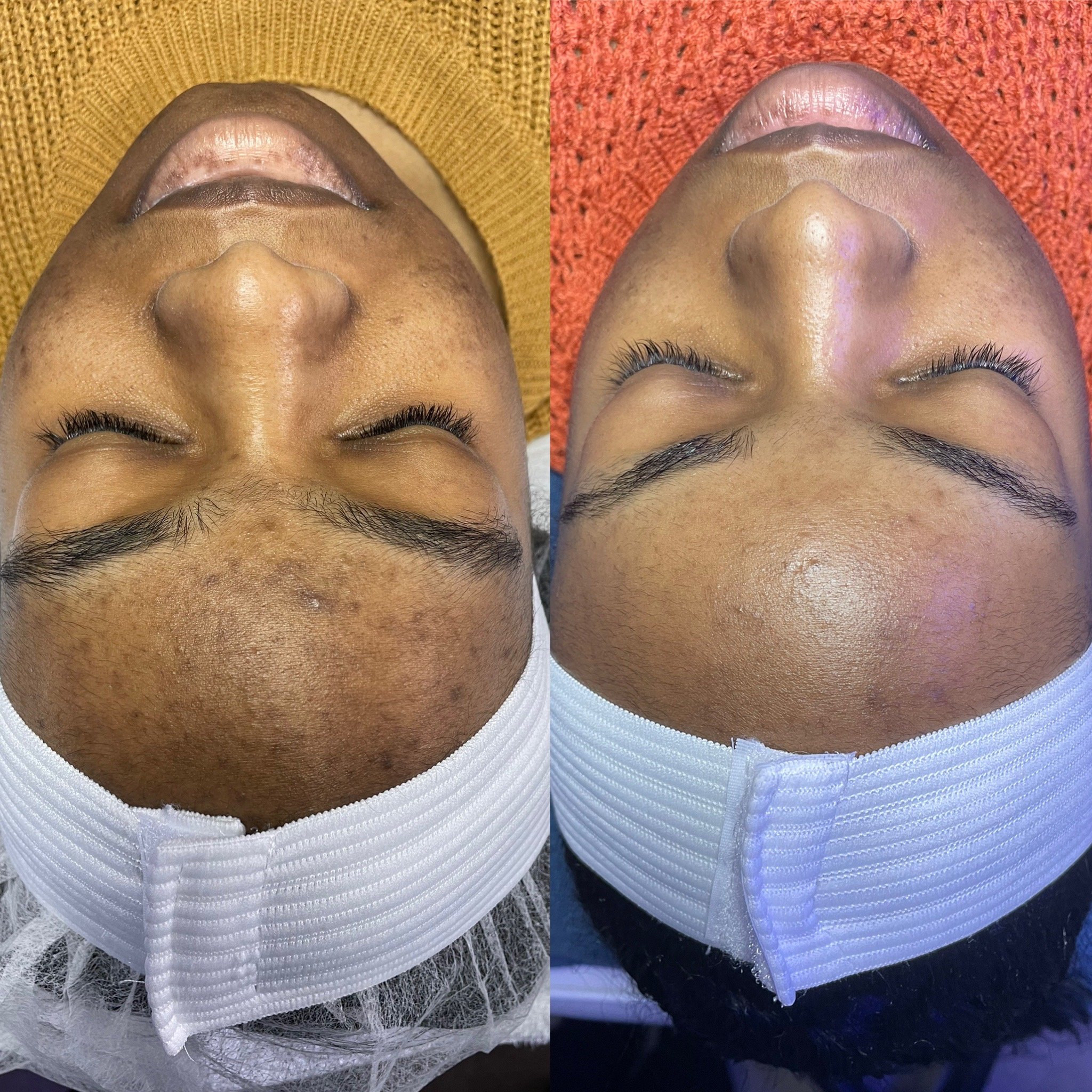
Melasma presents as broader, softly defined patches, often symmetrical, and is highly reactive to sun and hormonal changes.
Post-inflammatory hyperpigmentation appears exactly where the skin was once inflamed. Its color varies by skin tone and the depth of the original inflammation.
Sun spots are smaller, more defined areas that develop gradually over time in sun-exposed areas.
The distinction matters. Each type responds best to a slightly different approach, and treating them the same way often leads to stalled progress.
A Real-World Perspective: When Acne Is the Root Cause
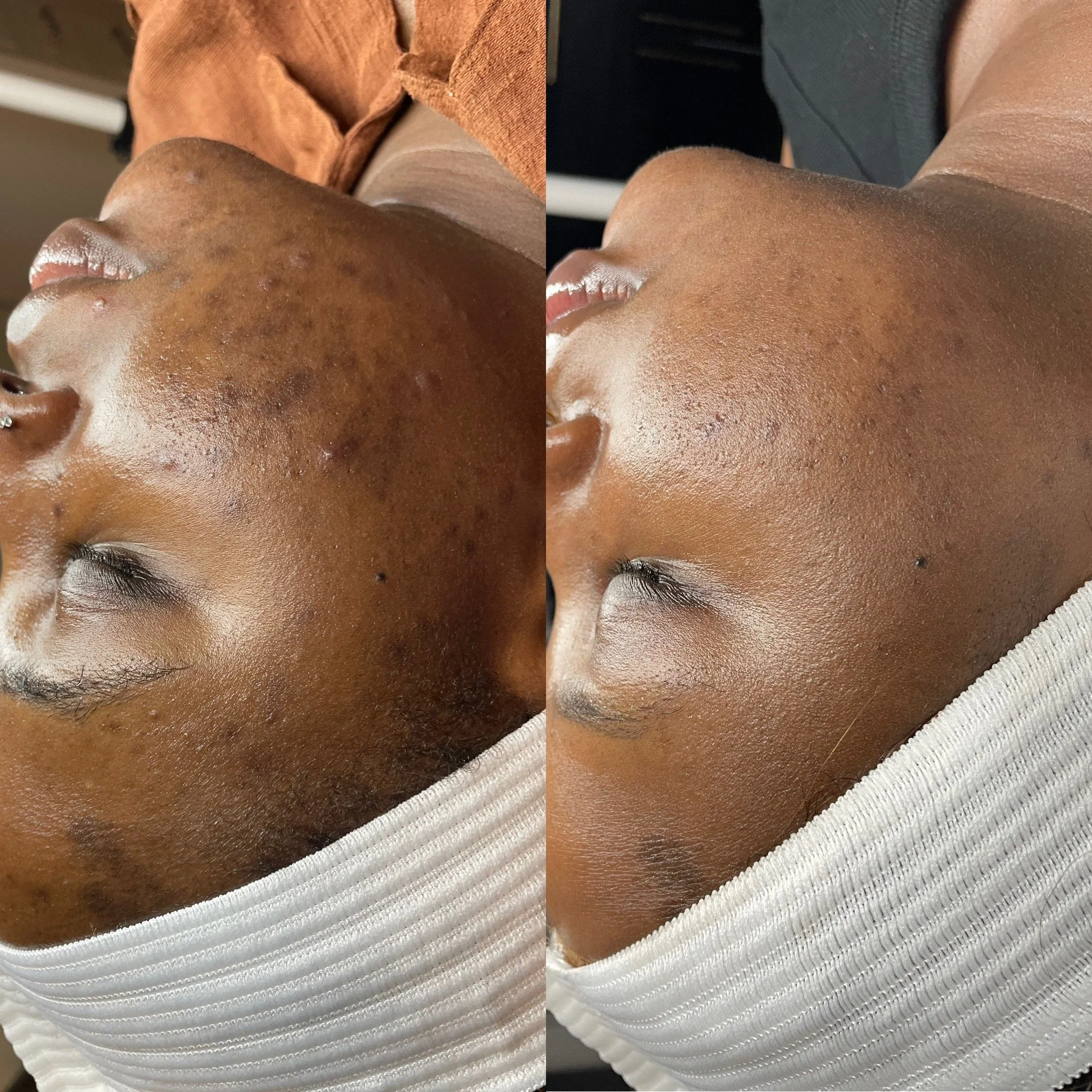
Jill came to me with concerns about pigmentation. As we spent time assessing her skin together, it became clear that the discoloration she was focused on was being fueled by ongoing inflammation and active breakouts in the same areas.
Rather than treating pigment in isolation, I chose to first calm the skin. Inflammation is often the root of post-inflammatory pigmentation, and without addressing it, any corrective work would have been short-lived. I created a professional routine specifically for her, one designed to regulate breakouts, reduce inflammatory activity, and restore balance to the skin.
Once her skin had settled and breakouts were consistently under control, we moved forward with a series of TCA peels, followed by microneedling. This progression allowed us to address pigmentation and early scarring at a point when the skin was receptive rather than reactive.
Her home care became the thread that held everything together. It supported the results of our treatments, helped prevent new inflammation, and encouraged newer pigmentation to fade more efficiently over time. The improvement was gradual, but steady, reflecting what skin does best when it is approached with patience, intention, and respect.
Professional Treatment Approaches That Support Real Change
Chemical Peels
Professionally formulated peels work by encouraging controlled exfoliation, allowing pigmented cells to shed gradually while revealing clearer skin beneath. Depth and formulation matter, as different types of pigmentation sit at different levels within the skin.
Microneedling
Microneedling supports the skin’s natural repair process by creating controlled micro-channels. This encourages collagen production and helps break up areas of uneven pigment, especially when paired with targeted serums.
Corrective Facial Treatments
Customized treatments allow for pigment correction while maintaining skin integrity. These are especially valuable when the skin needs support rather than intensity.
Light- and Laser-Based Therapies
When appropriate, these technologies target melanin with precision, helping the body gradually clear pigment without disrupting surrounding tissue. They are most effective when paired with consistent home care.
Topical Ingredients Used in Clinical Care
Certain ingredients play a supportive role when selected and used intentionally:
Hydroquinone, under professional guidance, helps regulate melanin production
Retinoids support healthy cell turnover and long-term clarity
Vitamin C offers antioxidant protection while gently brightening
Antioxidants calm inflammation while supporting pigment regulation
Niacinamide strengthens the barrier and limits pigment transfer
Tranexamic acid is particularly supportive for hormonally influenced pigmentation
Formulation and delivery matter as much as the ingredient itself. Professional products are designed to work efficiently without overwhelming the skin.
Prevention as a Daily Practice

Face Reality SPF 30 at Leyla Sufi Skin
Sun protection is foundational, not just during treatment, but long after results are achieved. Broad-spectrum SPF helps prevent new pigment from forming and keeps existing discoloration from deepening.
Mineral sunscreens with zinc oxide or titanium dioxide are often well-tolerated and reliable. Reapplication, protective clothing, and a gentle approach to the skin all help maintain balance.
Avoiding unnecessary irritation, over-exfoliation, picking, or harsh products, is just as important as what you apply.
When Professional Guidance Matters Most

If pigmentation does not respond to consistent home care, begins spreading, or appears suddenly, professional evaluation provides clarity. What softens sun spots may not address melasma, and guessing often delays improvement.
A comprehensive assessment considers pigment type, lifestyle factors, medical history, and current routines. From there, treatment becomes targeted rather than reactive.
Long-Term Management and Maintenance
Pigmentation care is not about quick correction. It is about consistency.
Thoughtful home care, scheduled professional treatments, and ongoing sun protection work together to maintain clarity. Monitoring the skin over time allows for early adjustments before pigment deepens again.
Closing Reflections
Hyperpigmentation on the face can be persistent, but it is rarely permanent when approached with understanding and patience. Clearer skin is not achieved through intensity. It is earned through intention, consistency, and trust in the process.
When the skin feels supported rather than rushed, it responds. With the right balance of professional care and daily ritual, pigmentation softens, tone becomes more even, and the skin settles into a healthier rhythm over time.
Frequently Asked Questions (FAQs)
1. How long does it take to see results from hyperpigmentation treatments?
Results from hyperpigmentation treatments vary depending on the severity and type of pigmentation. Significant fading typically takes 3-6 months with consistent treatment. Deeper pigmentation like melasma may require 6-12 months of dedicated treatment.
Results depend on the pigmentation type, your skin type, treatment methods used, and how consistently you follow your regimen. Professional treatments generally produce faster results than topical products alone.
2. Can hyperpigmentation come back after treatment?
Yes, hyperpigmentation can return, especially if you don't protect your skin from triggers like sun exposure. Melasma is particularly prone to recurrence with UV exposure or hormonal changes. Post-inflammatory hyperpigmentation can redevelop if you experience new skin trauma or inflammation.
Maintaining results requires ongoing sun protection, proper skincare, and often periodic maintenance treatments.
3. Are professional treatments safe for all skin tones?
While most professional treatments can be adapted for different skin tones, some require extra caution for darker skin. Certain lasers and aggressive chemical peels can potentially cause additional pigmentation in skin of color if not performed correctly. Working with an experienced esthetician who understands how to treat diverse skin types safely is essential for avoiding complications.
4. What's the difference between drugstore products and clinical-grade treatments?
Clinical-grade products contain higher concentrations of active ingredients and use advanced delivery systems that penetrate deeper into your skin. Professional formulations are often more stable and potent than over-the-counter versions. Additionally, treatments performed in-office use technologies and techniques not available for home use, delivering more dramatic and faster results.
5. Should I stop all my current skincare products before starting professional treatments?
Not necessarily, but you should consult with your esthetician before your first treatment. Some products, particularly retinoids or exfoliating acids, may need to be paused temporarily before certain procedures to prevent excessive irritation.
Your esthetician will review your current routine and make specific recommendations about what to continue, what to stop, and what professional-grade products to add for optimal results.