
Why Your Acne Isn’t Clearing Even With “Good” Products

Acne can be one of the most emotionally exhausting skin concerns, especially when you feel like you are doing everything right. You invest in quality products. You follow routines carefully. You are intentional. And still, your skin does not seem to move forward.
When clients sit across from me feeling discouraged, I often remind them that stubborn acne is rarely a reflection of effort or discipline. More often, it is a sign that the skin is overwhelmed, overstimulated, or being asked to heal faster than it can. Clear skin is not about doing more. It is about doing what the skin can actually receive.
Why Acne Takes Longer Than You Expect
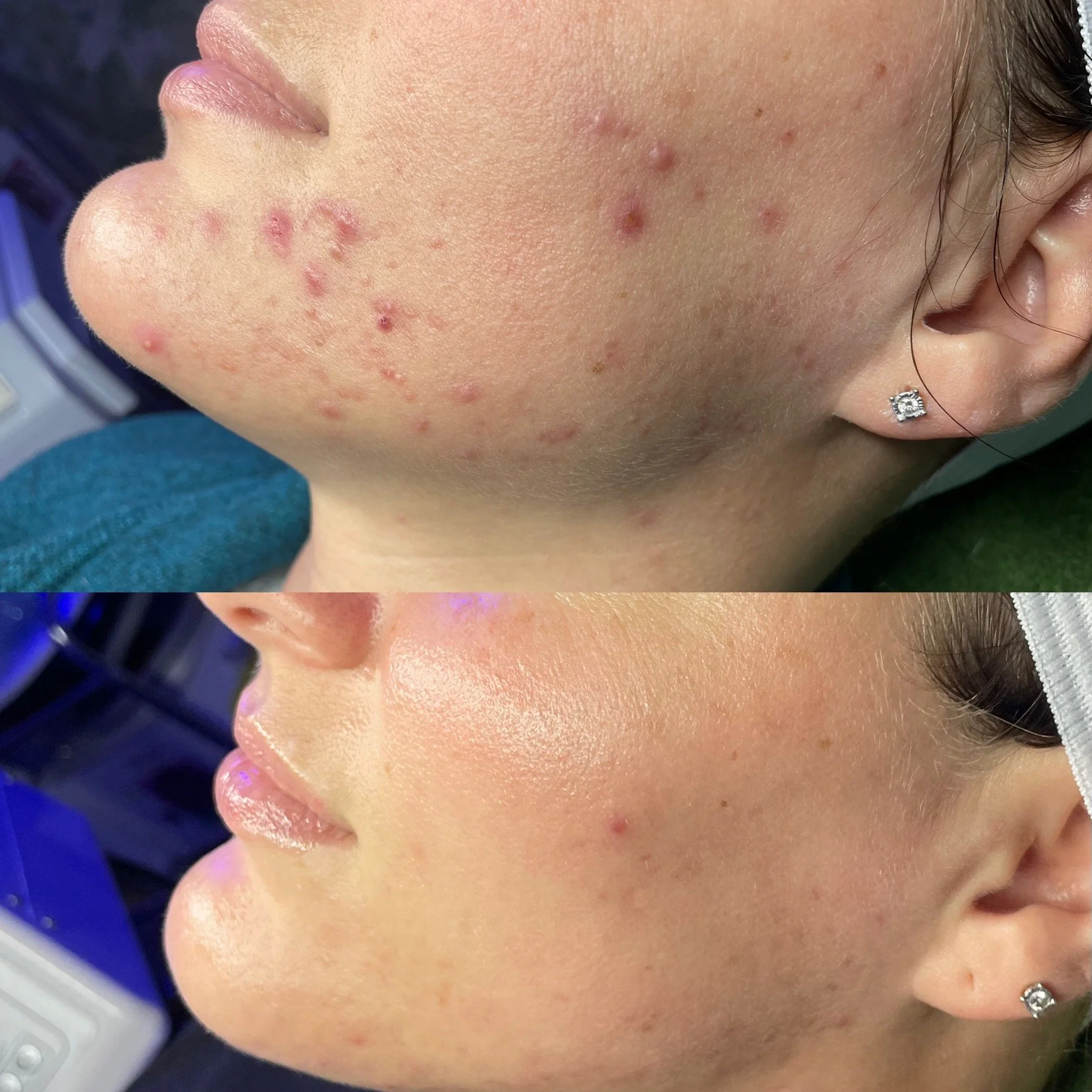
Skin changes slowly, even under the best conditions. The natural cycle of cell turnover takes about a month, and for acne prone skin that is inflamed or compromised, that timeline can extend further.
When treatments are introduced, the skin needs time to respond. Oil regulation, inflammation reduction, and congestion clearing do not happen overnight. Switching products too quickly often interrupts this process. Each change forces the skin to adjust again, which can lead to irritation and new breakouts that feel confusing and discouraging.
Even when improvement begins around the four to six week mark, true clearing usually unfolds over several months. Acne prone skin often requires ongoing support rather than short bursts of correction. When treatment stops as soon as the skin looks better, breakouts tend to return because the underlying imbalance was never fully addressed.
Where Even Thoughtful Routines Go Wrong
Treating Pimples Instead of Treating the Pattern
One of the most common things I see is spot treating active breakouts while ignoring the surrounding skin. By the time a pimple appears, congestion has already been forming beneath the surface for weeks.
Acne responds better to prevention than reaction. Applying treatment evenly across acne prone areas helps maintain clear pores and creates an environment where inflammation and bacteria are less likely to thrive.
Too Many Products, Not Enough Support
Using multiple serums, exfoliants, and treatments at the same time can quietly sabotage progress. While each product may be well formulated, layering too many actives overwhelms the skin barrier.
When the barrier is compromised, the skin becomes more reactive. Oil production increases. Inflammation lingers. Acne becomes more stubborn. More product does not equal better results. Often, it signals that the skin needs fewer inputs and more stability.
When Professional Products Still Work Against the Skin
Ingredients That Do Not Suit Acne Prone Skin
Price and quality do not always mean compatibility. Many professional and medical grade products contain ingredients that are too heavy or occlusive for acne prone skin. Certain oils, emollients, and fragrances can clog pores or trap inflammation, even when the product is otherwise beneficial.
These ingredients are not always obvious. They can appear in moisturizers, anti aging formulas, and even sunscreens. Without a trained eye, it is easy to unknowingly layer products that conflict with one another.
Conflicting Actives and Over Exfoliation
Combining multiple strong actives often creates more problems than solutions. Excessive exfoliation, multiple acids, or overlapping treatments can lead to chronic irritation.
When the skin is irritated, it responds defensively. Oil production increases. Inflammation deepens. The barrier weakens. Acne becomes harder to calm, not easier.
A Pattern I See Often in My Treatment Room
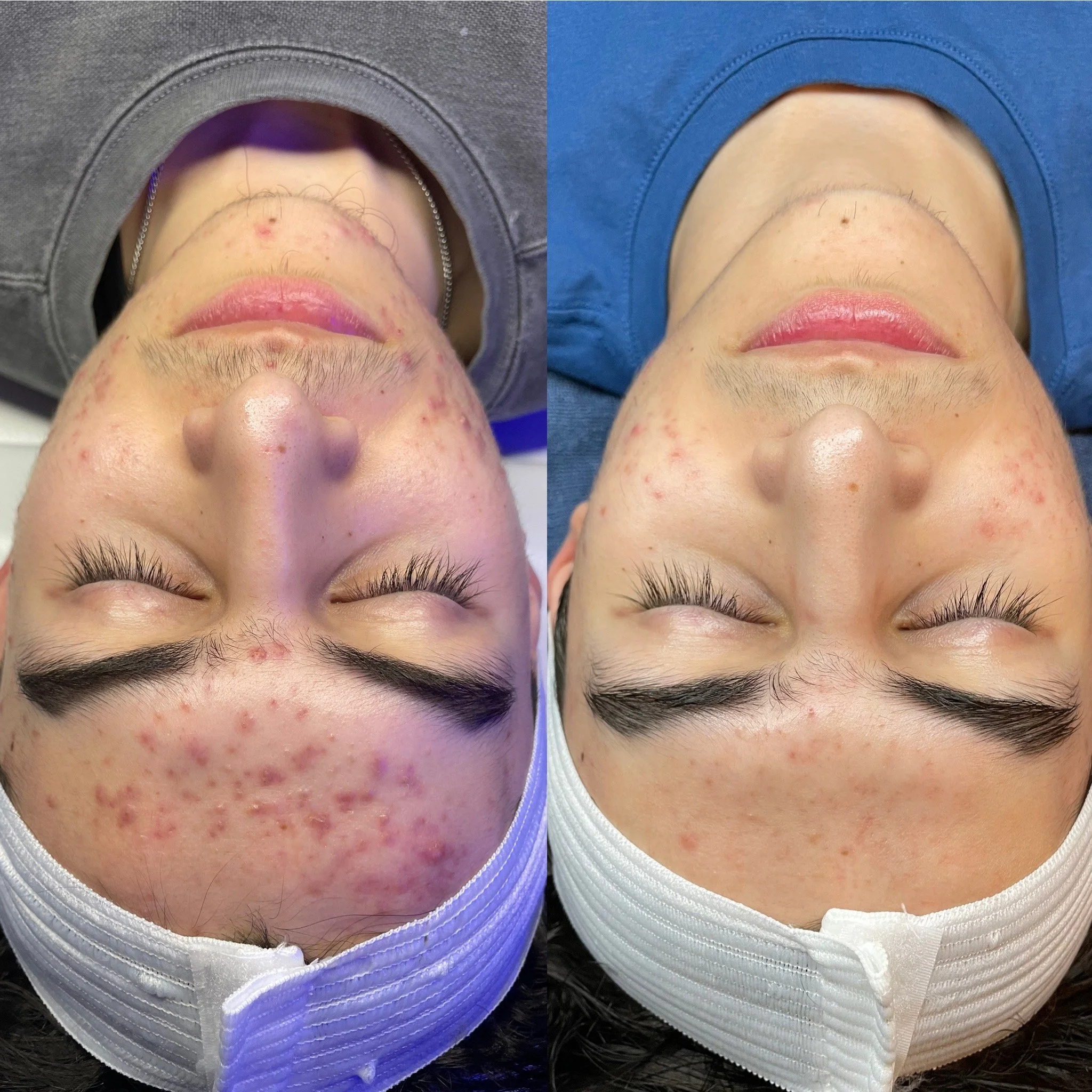
Recently, I worked with several new acne clients whose stories felt strikingly similar. They were dealing with irritation, redness, inflammation, dryness, and acne that refused to clear. Each of them was using professional or medical grade skincare.
We began the same way every time, with an intake form, a thorough consultation, and a skin analysis. I also invite clients to share their full skin history out loud. What they have tried. What worked briefly. What made things worse. This conversation often reveals details that do not always make it onto a form.
What became clear was not a lack of effort, but excess. Too many active and exfoliating products, not enough barrier support.
We paused certain products, simplified routines, and shifted the focus toward calming the skin and rebuilding resilience. Only after the barrier began to recover did I reintroduce the most appropriate active for each individual acne type.
Once the skin felt supported rather than attacked, progress became steady and predictable. Acne began to soften and redness reduced. The skin finally had space to heal.
The Role of Lifestyle in Acne That Will Not Clear
Skincare does not exist in isolation. Pillowcases, phones, makeup brushes, hats, and even hands transfer oil and bacteria back onto the skin daily. These small exposures can quietly undo progress over time.
Nutrition and hydration also play a role. Diets that spike blood sugar can stimulate oil production and inflammation. Dairy affects some individuals more than others due to its hormonal influence. Hydration supports barrier function and helps the skin repair itself more efficiently.
Stress and sleep are equally important. Chronic stress increases cortisol, which directly impacts oil production and inflammation. Sleep is when the skin regenerates. Without it, even the most thoughtful routine struggles to perform.
When Acne Is Not Actually Acne
Not every breakout responds to acne treatments. Conditions such as rosacea, perioral dermatitis, or follicular imbalances can resemble acne while requiring entirely different approaches. Treating these conditions incorrectly often makes them worse.
This is why professional evaluation matters. Proper identification prevents months of frustration and unnecessary irritation.
Looking Beyond the Skin When Acne Persists
There are times when acne is influenced by factors beyond topical care. When breakouts remain stubborn despite thoughtful routines and professional treatment, deeper investigation can be helpful.
For some individuals, allergy testing or blood work ordered through a medical provider can reveal underlying contributors such as food sensitivities, hormonal imbalances, or inflammatory markers. These insights do not replace skincare, but they can provide valuable context and help explain why the skin is reacting the way it is.
Addressing acne from both the inside and the outside often leads to more sustainable results, especially when progress has plateaued.
Why Professional Care Changes the Outcome
Over the counter products are limited in strength and scope. Professional care allows for higher quality formulations, deeper treatment strategies, and proper sequencing.
More importantly, it provides context. Acne programs are built around the person, not just the condition. Proper extractions performed by a trained esthetician help clear congestion without trauma. Chemical peels, when used appropriately, can support clearer pores and more even texture when the skin is properly prepared.
There is no universal acne solution. Skin responds best when treatment is personalized and paced with intention.
Building a Strategy That Actually Works

In my experience, the most effective acne routines are often the simplest. A gentle cleanser, a targeted treatment chosen for your specific acne type, a lightweight supportive moisturizer, and consistent sun protection create a stable foundation.
Routines that support the skin barrier play a critical role in clearing acne. When the barrier is healthy, the skin is able to heal more efficiently, irritation decreases, inflammation settles more quickly, and congestion releases more naturally. Acne does not clear faster when the skin is stripped. It clears when the skin feels safe enough to regulate itself.
Knowing when to seek professional guidance can prevent scarring and prolonged inflammation. Deep, painful breakouts, ongoing redness, or acne that affects quality of life deserves expert evaluation.
Closing Thoughts
When acne is not cooperating, the answer is rarely another product. It is often a signal that the skin is overstimulated, misunderstood, or healing under pressure.
Clear skin comes from addressing root causes, supporting the barrier, and allowing the skin to move at its own pace. When care is intentional and consistent, progress becomes sustainable rather than fragile.
The goal is not perfection, it’s balance. When the skin feels safe, it responds.
Frequently Asked Questions (FAQs)
1. How long should I wait before switching acne products?
Give any new acne treatment at least 4-6 weeks before deciding it's not working. Your skin needs this time to complete its cell turnover cycle and for active ingredients to take effect. Switching products too frequently irritates your skin and prevents any treatment from working properly.
2. Can drinking more water really help clear my acne?
While water alone won't cure acne, proper hydration supports your skin's natural healing processes and maintains a healthy skin barrier. Adequate water intake supports overall skin health and function, making it an important component of your clear skin strategy.
3. Why does my acne get worse when I start a new treatment?
Initial breakouts when starting new acne treatments, often called "purging," occur because active ingredients accelerate skin cell turnover and bring underlying congestion to the surface faster. This temporary worsening typically happens with retinoids and chemical exfoliants and may continue for several weeks as your skin adjusts.
If breakouts continue worsening beyond 6-8 weeks or you develop new types of blemishes in areas you don't normally break out, the product may not be right for your skin.
4. Is expensive skincare always better for treating acne?
Price doesn't guarantee effectiveness for acne treatment. Many affordable products contain the same active ingredients as luxury brands.
What matters most is choosing non-comedogenic formulations with proven acne-fighting ingredients at effective concentrations. Focus on ingredient lists and suitability for your skin type rather than price tags.
5. When should I see a dermatologist instead of trying products on my own?
Seek professional help if you have cystic or nodular acne, which causes deep, painful bumps that can lead to scarring. Also consult a professional if over-the-counter treatments show no improvement after 6-8 weeks of consistent use, if you're developing acne scars, or if breakouts significantly impact your emotional wellbeing.